Showing posts with label Economics. Show all posts

Sunday, February 07, 2010

Profit from an Islamic perspectives: Catholic Response to Zubair Hasan

This snowy weekend I was reading essays on profit when I stumbled upon Zubair Hasan’s Theory of profit from Islamic perspective.

It is a quick informative read that finished with a conclusion I do not agree with.

“In sum, for formulating an integrated operational profit theory let profit be defined as a
surplus over cost, the firm not the entrepreneur be made the focal point of its study, all
rudiments of dynamic change be regarded as its source, and scheme for its sharing
between capital and labor be devised to promote equity, growth, and peace in society.
Such a profit theory will impart realism to economics: both mainstream and Islamic”

My main disagreement with his conclusion is “let profit be defined as a surplus over cost”.

The late Spanish Scholastics had reached a different conclusion. Namely Saravia de la Calle, who said, “If we had to consider labor and risk in order to assess the just price no merchants would ever suffer a loss nor would abundance or scarcity of goods and money enter into the question.”

For Hasan’s search for a real definition of profit, he wanted numbers that could be measured. Yet by turning to “surplus over cost”, Hasan had prescribed the downfall to his theory of profit. For de la Calle correctly points out that “otherwise we would never find a case where merchants justly lose; they would always win.”

For de la Calle and other Scholastics, my source is Faith and Liberty: The Economic Thought of the Late Scholastics by Alejandro Chafuen.

Monday, January 11, 2010

Political Economy of Harry Potter: Ministry of Magic

The 2000’s have been a decade of Harry Potter. Although the series has finished, the story continues through the movies, and the love for the story spreads. Interestingly enough, a main theme through out the series has been the error in the Ministry of Magic who continuously undermine one of the most powerful greatest Wizard of all time.

The lesson? Government failure and their disillusion that they have the correct solution over the experts. Does real life need a villain in order for any fan of Harry Potter to see the errors of a strong central government which believes it knows better than the specialists?

Within the Potter world, could many events have been avoided if the Ministry of Magic had only listened to Harry Potter and Dumbledore?

Within the real world, could the events of the economic collapse been avoided if the government had corrected their policies according to what most economists viewed as the correct policy?

My last question is, why aren’t Harry Potter fans skeptical about government intervention?

Monday, June 15, 2009

Rocky and Economics

I have been stating that the Rocky series are some of the best films ever.
There have been books written about the economics and philosophies behind The Lord of the Rings, Matrix, and Star Wars series. Why has Rocky not made the list??

Rocky on comparative advantage:
                Yeah -- My ol' man who was
never the sharpest told me --
I weren't born with much brain
so I better use my body.

ROCKY
(continuing)
What's funny?

ADRIAN
My mother told me just the
opposite. She said, 'You
weren't born with much of a
body so you'd better develop
your brain.'

Rocky on self interest and regulation:
Rocky Balboa:
Yo, don't I got some rights?
Boxing Commissioner:
What rights do you think you're referring to?
Rocky Balboa:
Rights, like in that official piece of paper they wrote down the street there?
Boxing Commissioner:
That's the Bill of Rights.
Rocky Balboa:
Yeah, yeah. Bill of Rights. Don't it say something about going after what makes you happy?
Boxing Commissioner:
No, that's the pursuit of happiness. But what's your point
Rocky Balboa:
My point is I'm pursuing something and nobody looks too happy about it.
Boxing Commissioner:
But... we're just looking out for your interests.
Rocky Balboa:
I appreciate that, but maybe you're looking out for your interests just a
little bit more. I mean you shouldn't be asking people to come down
here and pay the freight on something they paid, it still ain't good
enough, I mean you think that's right? I mean maybe you're doing your
job but why you gotta stop me from doing mine? Cause if you're willing
to go through all the battling you got to go through to get where you
want to get, who's got the right to stop you? I mean maybe some of you
guys got something you never finished, something you really want to do,
something you never said to someone, something... and you're told no,
even after you paid your dues? Who's got the right to tell you that,
who? Nobody! It's your right to listen to your gut, it ain't nobody's
right to say no after you earned the right to be where you want to be
and do what you want to do!... You know, the older I get the more
things I gotta leave behind, that's life. The only thing I'm asking you
guys to leave on the table... is what's right.
Perhaps this will become a regular theme, economics from Rocky.

Monday, December 15, 2008

Economics Taught What Once Was Taught as Right was Always the Wrong.

Economics is a unique field of study. After a few questions it led me to open my eyes to a different world. An equilibrium between cars in each traffic lane, and the equilibrium would then help us assess which lane we ourselves want to drive on. This equilibrium helped us make our decision, it was information.
This question and answer leads to the want of applying such thought onto all things. Taking history classes became entertaining. It was no longer a memorization game but of applying the new theory that people make decisions using the equilibrium. How to know when to apply it? That was simple, I merely had to ask "why?" Why did some colonists revolt against the British? Why did the British not allow the colonists to leave peacefully?

Or how about the look back to what I was always taught throughout my years at public school and my first economic class. That the government, FDR, had saved us from the collapse of the market. We should all rejoice at the salvation from turmoil that was brought to us by the government. Apply economics to this period and a new outlook arises. I was lied to.
Arise the question of why? Why was I lied to? What is to gain?
What does economics teach? Incentives matter.
Why do incentives matter? As it gives rise to innovation.
Why does innovation matter? Others will imitate it.

Nothing is as black and white as I was once taught.
Government does not simply do what is best for the nation. Why?
Individuals choose not groups. With this simple find, we learn that politicians have the incentive not to do what is right, but to abuse their power.

I was taught to want to be President. Not anymore. Economics has taught me many things and what I would hope it teaches others is simply don't study and read material because we need to pass a class. Ask why? Why did this happen? Search for truth, you know you reached it once it has answered the question, "why?"

Monday, December 08, 2008

Cold Hearted or a Life with Morals

Scenario:
Many individuals find work and put their effort into being good at their job so that they can maintain a satisfying life. The company goes under and the workers are now out of work. Is this now my duty to give money to support them? If so, what incentives are we giving here; to not work hard let the company fail because in the end you are still supported? Is there something I am missing? Am I just cold-hearted or am I just being moralistic.

Sorry the company failed. I know if I were out of a job I'd want help too, but lets not reward bad behavior otherwise we should not punish the disobedient child.

Rewards and prizes go to those who deserve it, not to he who cries loudest. Society as a whole frowns upon the parent who give in to the bratty kid, why should we give in to the grown ups who cry loudest?

Monday, November 10, 2008

This world to our Heavenly home.

The wisest words I had heard this past week came from a priest who instructed me that it is not this world that matters but the next. We must not begin to think that God is on our side, but rather must keep asking ourselves are we in on his.

In other words, it is understandable why we get disgusted and upset by all the atrocities in the world today, but we should not allow these things to deter us from our goal of fulfilling the Father's will. There will always be violence, theft, murder, and other vile acts. The only possible way to reach zero crime is to have no freedom, and even then it is only obtained for a short period of time.
I am guilty of allowing myself to get upset and fired against the wickedness of the collectivist state, against the murder of innocents, etc. I must not allow myself to grow with this rage as it is deterring me from fulfilling the end that I want, to perform God's will.

Economics is a very unique study. It allows us to comprehend human cooperation in ways no other study can. With this I bring up price fixations. When economists speak of the market, they simply mean the players, the actors, the choosers, or in other words, all of us in this world who each day make a decision at a certain moment. We are the market. We, upon making a decision, impact an individual who we never have met. By purchasing an apple, that individual now cannot. By performing a job, that individual now can not. This is not to give the perception that the market is simply those taking from others, but rather to simply demonstrate how your choice would affect my own without your knowledge of ever meaning to.

Prices are a reflection of our choices. They help us understand where the good or services should go and to whom. Law of demand states as price goes up quantity demanded goes down. Likewise if price goes down quantity demanded goes up. Law of supply states that as price goes up, quantity supplied goes up. Following, price goes down and quantity supplied will go down. This also works vice-versa so we can find price from supply and demand. The key is the word and here, supply and demand.

What I am getting at is simple, there is an equilibrium, where supply and demand meet, for everything. There is a price and quantity for everything and the equilibrium is where they interchange. To create a law setting something at zero such as zero crime would be a price fixation. It is called a fixation because naturally our choices in the world give us a natural equilibrium meaning there is still crime in the world, but with a price fixation at zero we find something different. Now my choices have an increased cost which will impact the world in a harsh way because less people are doing it which means that quantity demanded is low that lets us know from the law of demand that price must be high. Accordingly with the law of supply we know that when price is high; quantity supplied is high. The signal this law is giving to the world is to cheat the system. Find a way to perform a crime, as the benefits are extremely high.

Think of Batman the Dark Knight. He begins to lock up all the criminals and with the lesser amount of criminals to rob from the innocent, the profit and amount of people to choose from stealing from is inherently high. A market that is hard to get into yet highly profitable; these are incentives that give rise to the Joker. (Money is not always the incentive. In the case of the Joker, being THE criminal of Gotham was more important.)
In the 1920's, Al Capone was a product of the Prohibition. He loved the law as it created more wealth for him. When competitors moved in, he moved them out or recruited them through force.
We can not hate anything of this world and seek government assistance to help us reach our solutions. We can not allow ourselves to be consumed in combating certain aspects of this world that we condemn ourselves from being in full communion in the next. What is here is only temporal. It is important and we should fight, but let our life's work be to do God's will and not our own. There will always be a form of evil in this world. We can not fight evil with evil, but fight it with love. As we hear time and time again, Love conquers evil.

Wednesday, November 05, 2008

Love thy Neighbor: How I as a Catholic don't Vote

I am first a Catholic. My faith comes before all other things in my life. With this, how can I have been expected to vote for anyone who supports abortion, immigration barriers, war, etc. How can I choose between politicians who do not support my own beliefs. Perhaps I agree with them on one of the three things listed above, but the probability that they agree with me on all three is incredibly slim. Am I to bend my faith in order to make a political vote?

The answer is clearly and always a No. You do not have to do anything you do not wish to, and to support someone that may bring other evils but not the one you are morally against is wrong. As a Catholic I must stand up for my faith and point that an open door immigration policy is the only possible way to love thy neighbor. They help with the economy in ways unimaginable by most who vote, and to deny them entry is preposterous as by creating such a law to restrict migration is not a demonstration of love.
War, which politicians have more control over, is not Love. Laws that prohibit abortion will not end abortion, there is no such thing as zero amount of murders and lets have it abortion is murder. So with such few words that proclaim "Love thy Neighbor" I find that it is not love that brings you to vote for a politicians hoping for salvation. Short term policies create short term gains but long term failures that must then be corrected again. When glass shatters its not easy to put the pieces back. Fortunately for us, the economy is not glass. It is a process that reflects each and every individual's choice. Stop looking for an easy way out with a new savior in politics. It is disgusting and not an act of love.
LOVE YOUR NEIGHBOR cooperate with him and trade. It is through social cooperation that man has decreased poverty in the modern world, NOT through government action. Be a Catholic and do good works, not vote in hope that good intentions may not lead us to Hell "this time".

Tuesday, September 30, 2008

GMU Catholic Economists First Gathering

Tonight, there was a gathering of a few students (some former, including myself) who decided to get together to discuss Catholic Social Teaching. Kevin Burke, the head of the Peace and Justice committee for the GMU Catholic Campus Ministry, had put together the group and assigned the discussion to be on Rerum Novarum.
All that attended had something to say on the social teaching's of Pope Leo XIII. The discussion went from the good points to the bad points of the Papal Encyclical and even to one another sharing why some points we thought were bad are really good. It was a fun time shared by all. Most gatherings last an hour to allow students to get to other class projects such as homeworks, but it appeared no one wanted to leave.
With a group full of students such as these, who would want to leave?
If you get a chance, head up to Brion's Grill on Tuesdays at 7:30 p.m. Don't have to be Catholic to discuss, and Tuesdays at Brion's is half price burger day in case you needed another incentive to come.

Saturday, September 27, 2008

The BuyOut Bet: Caplan is at it again.

I have to say that I get excited when Caplan wants to make a bet. Anytime someone who knows little about economics but can not help themselves from making outlandish claims; Caplan calls them out. With a gesture of a bet, he tells them that "Talk is Cheap", and that they need to "Put their money where their mouth is." For anyone can say anything, but if you ask them to put money behind their claims, it will prove how much they truly believe in what they say.

Is it time do more Crunches? FT on the Credit Crunch

Samuel Britton of the Financial Times had stated in May this year:
One striking feature of recent events is how slow they have been to hit the real economy. Although the credit crunch was first discerned last August no major area has yet recorded a downturn in activity, as distinct from a growth slowdown. This suggests not that the crisis is coming to an end but that it is slow-burning. The ominous feature is the one I have already hinted at in my reference to the continued trend rise in commodity prices, which could well be part of a long-term shift in the terms of trade against the industrial west, as well perhaps as part of a shift in political and economic power. Here is an area where it will be necessary to adapt to market movements rather than to attempt to reverse them by ill-considered intervention.
and recently on discussing Chris Coyne's book After War:
he(being Coyne) accepts the case for occasional intervention for humanitarian reasons or to protect US citizens. His main suggestions are to avoid nation-building types of intervention and adopt free trade, if necessary unilaterally by the US. It is perhaps déformation professionelle for economists to overrate the spillover benefits of the latter. But peace and welfare may depend on how far the next US president accepts the main lines of his analysis – a subject even more important than the current credit crunch.
HT to Chris Coyne.

Wednesday, May 07, 2008

Render Unto Caesar

For those that know me, they know I claim that economics helped me find faith. From social cooperation, entrepreneurship, to taxes... all are included in the Bible.

Well I have entered many arguments in justification of a smaller government, and in religious circles have always faced the same question. "What about 'Render unto Caesar'?"
Their take is that Jesus, being perfect, would not leave the words to be interpreted.
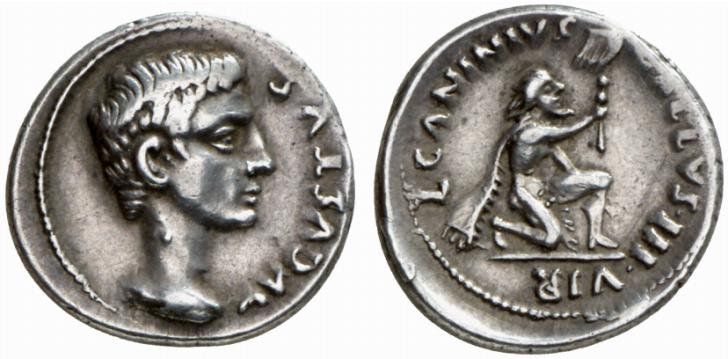
I see it as Jesus being perfect. The question of taxes was asked of Jesus in order to provoke him, and rather than answer against taxes, which would surely allow the state to arrest him. Jesus answers the question perfectly, 'render unto Caesar'. This does not mean that taxes are meant to be given; he referred to the coins that had the face of Caesar, but currency was not originally founded by government. In fact, the Roman empire needed taxes for their everyday regulatory society. If taxes are rightly the governments to have, then as are slaves.Roman coins with Caesar on it. Government's began to put their face on currency that cycled as to extend their control.

The Roman empire could not survive without its slaves, and yet we do not justify the slaves with the saying 'Render unto Caesar'.
No, I tell you, it is only the most perfect answer to the tricky question. It is like the middle school game where you ask your friend "Have you told your family you have AIDS?" If you answered yes you admit that you had AIDS. If you had answered no, you had admitted you had AIDS. It was a catch-22. While Jesus, so perfect, was able to overcome the Catch-22.
Taxes are an unlawful taking as we have no choice but to give and if we refuse we will be punished. As God gives us free will and does not restrict us from either choosing Him or against Him, why should we think He would restrict our choice towards government taxes.

So Render Unto Caesar What is Caesar's... Nothing.

This is a case of the Lydian Lion: Considered by some as the world's first coin.

Wednesday, April 23, 2008

The Message is the Same: THERE IS ONLY ONE TRUTH

Economics has lead me to believe in liberty. The ideas that have been fighting against coercion since the dawn of man promoting the life of any man.

The lessons from economics are simple. Free trade is needed to allow mankind to flourish and deny the pains which are poverty, famine, and death(not that death is a bad thing, but an early death such as the loss of innocent blood). Free trade spreads liberalism which denies any type of servitude, warfare, or coercive action. It is the ability for mankind to interact with each other and to increase their own satisfaction in life. Man lives only to increase his welfare and through trade with each other are we able to increase our own welfare and that of our families & friends.

The lessons from Christianity are simple. Jesus Christ gave us one law to follow, Love one another. Love is the simple answer that can and has changed the world. Love conquers hate. Love enables mutual, satisfactory interactions between individuals while Hate brings servitude, warfare, and a coercion. The Christian Church's message has been to speak out against Hate and to promote Love. This is the message that is spread and at the foundation of the Church is the institutions of friends & families.

The message from economics is that we, those who understand liberalism, must spread the word promoting liberty to whomever we can allowing for material wealth to spread to the corners of the earth increasing the welfare of all the citizens of the world.
The message from Christianity is that we, Christians, must spread the word that Jesus Christ has conquered death, conquered sin, and freed all the citizens of the world from all forms of control through his Love for us. All that is asked is we Love everyone such as He Loved us.
There is only one message; only one truth. Love will set us free and by love you do not create rules to deny the opportunity for an individual to interact with another.

TWO VIDEOS one from the Acton Institute and the second from Karol: A Man Who Became Pope (a touching movie everyone should watch, religious or not)


Austrian Knights: China's Influence in the Western Hemisphere

Last night two Mason students, one a philo/econ major and the other a global affairs major discussed China's influence in the Western Hemisphere. They had found their sources mainly from the Woodrow Wilson International Center for Scholars in an article title Enter the Dragon; they had also had recorded a lecture series upon the topic which you can find here. The discussion relied upon the actions of China and its effects with Latin America. The state department has assembled their own study of the program here, and the Heritage Foundation has also had some work published here. It should be noted that the State Department's and the Heritage Foundation's work is from 2005 and therefore will not have some things brought to light by the Wilson Center.

For a brief summary of the paper, China wishes to bully Taiwan by taking their customers and intends on making its presence known as a world power by spreading its market network across the globe. China has thus increased its market activity within Latin America relying on the Latin American nations for food, oil, and other necessary resources for the growing economy within China.
The main fear is that the United States will then be surrounded by 21st century socialism and a rise of another cold war as China ties itself to national leaders such as Chavez, Morales, Castro, etc.
What answer are we searching for? The best conclusion has been given without this research, Free trade. If the U.S. would open its borders the ideas of liberty would spread out through out the foreign nations. Is there a policy such a Free Trade Policy needed in order to promote this system? Only if that policy is one sentence "There will be Free Trade"; anything else is unjustified and will deny the spread of liberty.
How then do we spread liberty? Is it the best to trade, to teach and spread the ideas, or is it to have a government involvement?
Note: I do not agree with the government involvement as by reading the conclusion of the State Department's statement, their solution is the Millennium Challenge promoted by Jeffrey Sachs, which most of us know is an insane policy which would not help the foreign nations.
The best answer therefore is to promote trade and the spread of the ideas. We need to get the actors, the artists, the musicians, and the writers to help spread the our views.
What do you think?
Should we fear China or is it just another ploy for the government to involve itself in affairs it has no need to meddle with?

Sunday, April 20, 2008

Why Austrians Appear to be so Negative: undergraduate response to Dr. Kling

Arnold Kling on his blog (EconLog) says:
To the extent that Austrians make predictions that sound falsifiable, they tend to be like Paul Krugman (who is not an Austrian), repeating a mantra "bad times are coming, bad times are coming" every year. Then, when bad times come they can say, "See, I told you so." It would be more interesting if every once in a while they predicted good times.
From my studies, I have learned that it is easy to predict occurrences when we have information. Heck, anyone can do that; if poker players knew what each other had in their hand there would be no game. In football, if the opposing team knew something about their opponents offense they have a better chance of stopping them. The Austrians are no different. They continuously call out the bad times when there is government interference. Government intervention allows for more information which with common sense can be applied to predict the outcome.

What was preached by Hayek and now by Austrians such as Easterly? There is no way to predict the future. There is too much information within the market for any individual or group of individuals to be able to make any comprehension of it. Therefore there is no plan on how to predict a good time or a bad time, but when the government intervenes... information is given that allows for a prediction. That Austrians predict only bad times therefore tells us one thing, any government interference is viewed as the cause of a bad time.

Sunday, April 06, 2008

FEE @ MASON!!

Foundation for Economic Education, now participating in university outreach, is hosting a full day of lectures at George Mason University on April 19th.


We have all heard the cries "IT IS NOT FAIR"
Well it is not, and FEE is here to help address the issues that are largely debated but hardly understood.

The issues will be from Foreign Aid; International Labor Standards; even to Institutions, Constitutions, and Economic Growth...

Speakers include Doug Bandow, Geoffrey Lea, and Joshua Hall.
Program for the event can be found here, and don't forget to register here, as it is to guarantee a copy of The Law (already have it? Good! Now get another to pass to someone else you may believe may benefit) and a lunch on Saturday afternoon.

The GMU Economic Society will kick off the FEE event the night before with a social gathering and a chance to hear from our very own Professor Bryan Caplan of The Myth of the Rational Voter fame.

Don't forget to sign up for the wonderful Summer Seminars at FEE in Irvington-on-Hudson, NY just a half hour outside of NYC!!! The seminars are first come first serve if you meet the criteria for the program basis, so act now and apply. Apply to more than one to increase your chances or to be the rare individual who gets to attend more than one...(note: Although you may get accepted to two programs, you may be asked to pay for the hotel accommodations for one of the seminar programs.)
Be on the look out for more information...

Wednesday, February 20, 2008

Liberty Fund has an Interactive Room Too Good Not to Share

AS POSTED ON GMU ECONOMICS SOCIETY BLOG

Most know Liberty Fund for their catalog of books and online library. Now how about a chance to tour their online interactive GOODRICH ROOM. The room's walls have different names throughout history that have helped lead the argument on Liberty. From the Amagi and Gilgamesh to the Declaration of Independence. Each historical figure opens a new tab with a small historical note and its importance for liberty.

If you knew about the catalog but did not know about the online library, then it is time to get acquainted. It is a large database of online materials and difficult to decide where to begin. Liberty Fund has made easier and given us a starting point, HERE. You can log on to create reading lists, share with others, and view other members lists. Can it get any better?

ENJOY!

Sunday, January 27, 2008

Why I became a Catholic: The Economic Principles That Led Me to Religion Part 1

Through my studies in economics, I have met many individuals who hold no faith towards religion. Some claim to be atheists while others agnostic, and yet I appear to be one of the limited few who turned to religion as my understanding of the science grew. The questions perhaps should be addressed why is it that I have turned to faith while others who study economics do not?

The Catholic faith believes that all of the citizens of the world are Catholics. (What religion would not see the world as its children?) Catholic, in fact, means universal therefore all men are called to go to Heaven by imitating Jesus, but this is only the tip of the faith which means I could not discuss all of it in one blog.
Economics is the study of individual's choices among a world of scarcity and the affects of their choices both intended and unintended. Think of a decision you made this morning of getting out of bed rather than staying in it. That is one extra person awake, breathing, eating, whatever other acts you may want to consider. That one extra person is breathing in that air that could have been for another, ate the food that could have gone for another, and even taking up an amount of space that could have been for another. Just one choice of getting out of bed has many side effects which would cause others to make decision likewise. If someone is in a spot you want to be in, you have a choice to make from asking them to move, paying them to move, or even moving to another spot themselves. Through actions individuals interact, and by cooperating with one another we reach our desired ends. Thus everyone in the world is tied to one another by the choices they make which affect the choices that others make.

The Catholic faith as it is universal sees the people within the Church to be the body of Christ and Jesus as the head. As the body, the people interact with one another each trying to imitate Christ and reach Heaven. Each making their own choices to reach heaven which affect others abilities to make choices and the Church tells Catholics to always look out for one another.
How fascinating that the world filled with individuals with different goals work together in such a constructive way for most individuals to actually achieve this goal. The world socially cooperates without any control mandating each individual how to do it. This symbolized to me the citizens of the world to be acting as a body, The Body of Christ.

Wednesday, December 19, 2007

Saving the Environment: No need for government

If you did not know, today the U.S. government had passed their energy bill. This is supposed to jumpstart the use from petroleum fuel to bio-friendly fuels. Thank you government for all your hard work in passing a bill that is useless except to halt the choices of your own citizens.

PETA's efforts have failed in halting the amount of middle class citizens from buying chicken from KFC; should the U.S. government get involved in order to promote the practice of fast food chicken services? If your answer is no, then what is the difference between the government passing a law with chickens to passing a law with fuels.

There have always been alternatives to oil. We may not use these alternatives, but the reason is that it is too costly. The same reason why PETA's effort fail with KFC. Their chicken is cheap and to go to PETA friendly substitute is more costly. If their celebrity friends such as Paul McCartney and Pamela Anderson would pay me the difference I would happily stop eating at KFC; THIS IS NOT A CALL FOR GOVERNMENT SUBSIDIES IN ANY MANNER. Notice that Pam nor Paul HAVE NOT given money to me or anyone else to stop eating only raised their voice in a cheap protest that hardly costs them.

The new law makes it costlier to maintain of life that we have; the cheaper one and replaces it with the more costly. Is this the work of business lobbying allowing for government rules to go in favor? It appears so since we know through Ludwig von Mises that
[r]estrictive action on the other hand is always advantageous for the privileged group and disadvantageous for those whom it excludes from the market. It always raises the price per unit and therefore the total net proceeds of the privileged group. The losses of the excluded group are not taken into account by the privileged group.

From this we can judge that the government must be giving the blessing to one at the cost of the others. Thank you government.

Why do we have alternatives? Naturally, businesses want to make money and are always searching for the best method; at least, this is the popular stereotype. Thus there must have been alternatives although not cheap alternatives since no one was using them. This law allows for the more expensive alternatives to be cheaper only because their is a law made up by certain individuals to solve a problem that they define.
No, there is no need for such laws. This is just a disgrace and an abuse of power.

Note: this does not necessarily mean that the government is hurting one business at the cost of the others such as in oil giants. Rather, it may be the case that they all agreed to this law as it keeps each in line to searching for alternatives away from foreign oils. This would mean that the cost was transferred to the average citizen who must now PAY more for his fuel. Bio-friendly fuels were coming. It was inevitable, but the law is a disgrace. Atlas Shrugged could be rewritten with Hank Rearden as the bad guy, with his Rearden Steel benefiting from the government law that benefit the few at the cost of the Many.

Shame, Shame on you U.S. Government for increasing the costs to the many rather than having the product improved to be better suited for us all. Shame.

I did not discuss the issues with lightbulbs or most of the energy, but I think the broad case here makes its case in each argument.

Monday, October 22, 2007

The Trinity of the Market Price

Have to love the end of a Sunday in the middle of football season.
Yes, Football, great weather, and papers to write for so many classes evolve into late nights... ok only until two because I my cost - benefit analysis tells me that sleep is greater than staying up to finish editing a paper.

The point, the Trinity of the Market found in Mises' Human Action.
Check it out page 338.
The pricing process is a social process. It is consummated by an interaction of all members of the society. All collaborate and cooperate, each in the particular role he has chosen for himself in the framework of the division of labor. Competing in cooperation and cooperating in competition all people are instrumental in bringing about the result, viz., the price structure of the market, the allocation of the factors of production to the various lines of want-satisfaction, and the determination of the share of each individual. These three events are not three different matters. They are only different aspects of one indivisible phenomenon which our analytical scrutiny separates into three parts. In the market process they are accomplished uno actu. Only people prepossessed by socialist leanings who cannot free themselves from longing glances at socialist methods speak of three different processes in dealing with the market phenomena: the determination of prices, the direction of productive efforts, and distribution.


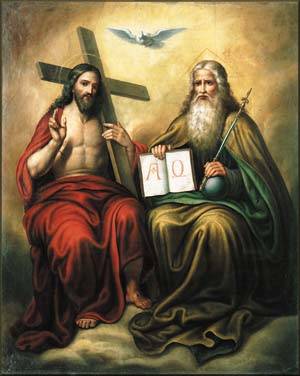
Just as the Holy Trinity in the Father, Son, and the Holy Spirit. The pricing process is broken down only to allow our feeble minds to better understand it.

Saturday, September 29, 2007

Incentives matter, even Birds think so

You can spend a lifetime discovering things on the internet. Luckily for me, it took me a short time while browsing through videos for good laughs on YouTube.


As always, life finds a way. Amazing what an incentive will cause someone or thing to do.
The birds wanting to crack nuts with ease and safety had devised an interesting system by using their surroundings

Yet we find other birds who find a better way to adapt with no need to inconvenience themselves with a high cost upon their lives. Everywhere and in everything we find incentives. The bird steals but does not think of it as stealing only for the fact that it has received food. For the birds there is only one incentive, to eat.

We are faced everyday with our own decisions to make facing incentives and it is our job to find the easiest way of obtaining what it is we want. Anything can be done... you just need the right incentives to do it.