Sunday, May 11, 2008

Proposition for Mother's Day

  • Who had chosen this day to be Mother's Day?
  • Why should we all celebrate our mothers on the same day?
  • Why is it looked down upon when you don't?
  • Is it not better when the tradition is all your own such as wedding anniversaries?
  • Have to choose to love; if you are giving because it is expected then there is no love demonstrated in that moment, but if you are to give because you wanted to express yourself then there is a demonstration of love.
I propose that we change this. I will begin to celebrate Mother's Day on my birthday. I do not celebrate my birthday, and on the day that I had done nothing my Mother gave birth to me. It is a special day uniquely her own, and I will always know when to thank her each year.

In fact, why make birthdays uniquely a Mother's Day? Why not Father's Day too?
I think, I'll celebrate Parent's Day where I can celebrate the blessing my parents/family have bestowed upon me. Now I can get that reservation at the restaurant without a big wait, and show my love for them when I want to the way I like without any rules or restrictions. With the added bonus that I would never forget the day.

I can't wait for my birthday this year. I get to tell those who raised me
HAPPY PARENTS DAY!

Wednesday, May 07, 2008

Render Unto Caesar

For those that know me, they know I claim that economics helped me find faith. From social cooperation, entrepreneurship, to taxes... all are included in the Bible.

Well I have entered many arguments in justification of a smaller government, and in religious circles have always faced the same question. "What about 'Render unto Caesar'?"
Their take is that Jesus, being perfect, would not leave the words to be interpreted.
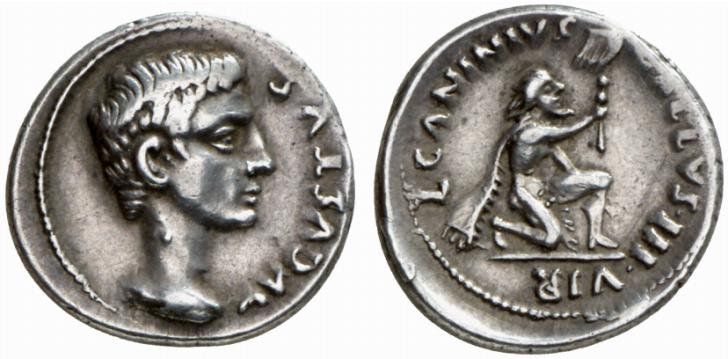
I see it as Jesus being perfect. The question of taxes was asked of Jesus in order to provoke him, and rather than answer against taxes, which would surely allow the state to arrest him. Jesus answers the question perfectly, 'render unto Caesar'. This does not mean that taxes are meant to be given; he referred to the coins that had the face of Caesar, but currency was not originally founded by government. In fact, the Roman empire needed taxes for their everyday regulatory society. If taxes are rightly the governments to have, then as are slaves.Roman coins with Caesar on it. Government's began to put their face on currency that cycled as to extend their control.

The Roman empire could not survive without its slaves, and yet we do not justify the slaves with the saying 'Render unto Caesar'.
No, I tell you, it is only the most perfect answer to the tricky question. It is like the middle school game where you ask your friend "Have you told your family you have AIDS?" If you answered yes you admit that you had AIDS. If you had answered no, you had admitted you had AIDS. It was a catch-22. While Jesus, so perfect, was able to overcome the Catch-22.
Taxes are an unlawful taking as we have no choice but to give and if we refuse we will be punished. As God gives us free will and does not restrict us from either choosing Him or against Him, why should we think He would restrict our choice towards government taxes.

So Render Unto Caesar What is Caesar's... Nothing.

This is a case of the Lydian Lion: Considered by some as the world's first coin.

Wednesday, April 23, 2008

The Message is the Same: THERE IS ONLY ONE TRUTH

Economics has lead me to believe in liberty. The ideas that have been fighting against coercion since the dawn of man promoting the life of any man.

The lessons from economics are simple. Free trade is needed to allow mankind to flourish and deny the pains which are poverty, famine, and death(not that death is a bad thing, but an early death such as the loss of innocent blood). Free trade spreads liberalism which denies any type of servitude, warfare, or coercive action. It is the ability for mankind to interact with each other and to increase their own satisfaction in life. Man lives only to increase his welfare and through trade with each other are we able to increase our own welfare and that of our families & friends.

The lessons from Christianity are simple. Jesus Christ gave us one law to follow, Love one another. Love is the simple answer that can and has changed the world. Love conquers hate. Love enables mutual, satisfactory interactions between individuals while Hate brings servitude, warfare, and a coercion. The Christian Church's message has been to speak out against Hate and to promote Love. This is the message that is spread and at the foundation of the Church is the institutions of friends & families.

The message from economics is that we, those who understand liberalism, must spread the word promoting liberty to whomever we can allowing for material wealth to spread to the corners of the earth increasing the welfare of all the citizens of the world.
The message from Christianity is that we, Christians, must spread the word that Jesus Christ has conquered death, conquered sin, and freed all the citizens of the world from all forms of control through his Love for us. All that is asked is we Love everyone such as He Loved us.
There is only one message; only one truth. Love will set us free and by love you do not create rules to deny the opportunity for an individual to interact with another.

TWO VIDEOS one from the Acton Institute and the second from Karol: A Man Who Became Pope (a touching movie everyone should watch, religious or not)


Tax Freedom Day

Today we celebrate Tax Freedom Day. This is the last day of the year we work to pay off all the taxes that are taken from us by the government. Thanks to The Tax Foundation for the info...
and to celebrate our freedom, they even made a song.


I had thought about it and thought today wouldn't be complete without a little tune from the Beatles:

Austrian Knights: China's Influence in the Western Hemisphere

Last night two Mason students, one a philo/econ major and the other a global affairs major discussed China's influence in the Western Hemisphere. They had found their sources mainly from the Woodrow Wilson International Center for Scholars in an article title Enter the Dragon; they had also had recorded a lecture series upon the topic which you can find here. The discussion relied upon the actions of China and its effects with Latin America. The state department has assembled their own study of the program here, and the Heritage Foundation has also had some work published here. It should be noted that the State Department's and the Heritage Foundation's work is from 2005 and therefore will not have some things brought to light by the Wilson Center.

For a brief summary of the paper, China wishes to bully Taiwan by taking their customers and intends on making its presence known as a world power by spreading its market network across the globe. China has thus increased its market activity within Latin America relying on the Latin American nations for food, oil, and other necessary resources for the growing economy within China.
The main fear is that the United States will then be surrounded by 21st century socialism and a rise of another cold war as China ties itself to national leaders such as Chavez, Morales, Castro, etc.
What answer are we searching for? The best conclusion has been given without this research, Free trade. If the U.S. would open its borders the ideas of liberty would spread out through out the foreign nations. Is there a policy such a Free Trade Policy needed in order to promote this system? Only if that policy is one sentence "There will be Free Trade"; anything else is unjustified and will deny the spread of liberty.
How then do we spread liberty? Is it the best to trade, to teach and spread the ideas, or is it to have a government involvement?
Note: I do not agree with the government involvement as by reading the conclusion of the State Department's statement, their solution is the Millennium Challenge promoted by Jeffrey Sachs, which most of us know is an insane policy which would not help the foreign nations.
The best answer therefore is to promote trade and the spread of the ideas. We need to get the actors, the artists, the musicians, and the writers to help spread the our views.
What do you think?
Should we fear China or is it just another ploy for the government to involve itself in affairs it has no need to meddle with?

Sunday, April 20, 2008

Why Austrians Appear to be so Negative: undergraduate response to Dr. Kling

Arnold Kling on his blog (EconLog) says:
To the extent that Austrians make predictions that sound falsifiable, they tend to be like Paul Krugman (who is not an Austrian), repeating a mantra "bad times are coming, bad times are coming" every year. Then, when bad times come they can say, "See, I told you so." It would be more interesting if every once in a while they predicted good times.
From my studies, I have learned that it is easy to predict occurrences when we have information. Heck, anyone can do that; if poker players knew what each other had in their hand there would be no game. In football, if the opposing team knew something about their opponents offense they have a better chance of stopping them. The Austrians are no different. They continuously call out the bad times when there is government interference. Government intervention allows for more information which with common sense can be applied to predict the outcome.

What was preached by Hayek and now by Austrians such as Easterly? There is no way to predict the future. There is too much information within the market for any individual or group of individuals to be able to make any comprehension of it. Therefore there is no plan on how to predict a good time or a bad time, but when the government intervenes... information is given that allows for a prediction. That Austrians predict only bad times therefore tells us one thing, any government interference is viewed as the cause of a bad time.

Monday, April 07, 2008

Russian Video Conference- An Attack on Consumerism

FROM GMU ECON SOCIETY BLOG:
This morning at 9 a.m. I found myself in a video conference in Research I on the Fairfax campus of GMU with a room full of sociologists studying globalization and a room full of students from Moscow who said they studied global economy. The topic for the discussion was consumerism. Peter Stearns, a provost at Mason, had started the session by giving a brief introduction to what he believes is consumerism and to how he believes it should be viewed and addressed.
The event turned to be a lashing out against what they have taken to be Consumerism.
Peter Stearns had roughly described consumerism as a deep interest of groups in acquiring goods they do not need. The purchase of goods that are not needed for survival.
Historically, Stearns stated, consumerism can be explained, but viewing that many societies were extremely hostile towards it the subject must be studied to comprehend why societies would want such a world. He had correctly turned to the 17th and 18th centuries with the Industrial Revolution and the beginning of the first globalization(trade with the colonies) as the source of the increase wealth which he saw as the reason why individuals began to buy the goods not essential to survive. To Stearns, consumerism grew because individuals wished to have things to identify themselves much like a wealthy person today purchasing a large mansion or designer clothes. He does not view this purchasing of material as a blessing but rather as an absurdity. Stearns had clearly defined his distaste towards the large debts most American citizens acquire in order to purchase these consumer goods. My response is simply, isn't it a good thing? We are receiving goods without even having to pay for them immediately. We are getting the upperhand within this deal. See CafeHayek for their so many blogs on this topic such as this recent one titled, "I [Heart] America's Trade Deficit"

I want to define here that consumer goods is never clearly defined. By defining consumer goods, as those goods which are not needed to survive, who is to say what is needed since what is needed for me is not needed for others. Bread has been the main food source for most of man's history. It was not until recently that man was able to have more choice in his food supply. In Mises' The Free Market and Its Enemies, Mises points out that Queen Anne of England had seventeen children; none made it to adulthood, yet with the Industrial Revolution, with the age of consumerism living standards improved allowing for the mortality rate to improve. Mises says, "from the point of view of the parents the improved life expectancy of their children may not have seemed merely materialistic(consumeristic)." In fact, Mises points towards consumerism as a gift. Before the Industrial Revolution, common man had bought his clothing through second hand stores. Clothing was handmade and a skillful task and therefore was only a good for the wealthy. The global trade with the colonies brought in cotton, a common man's good, which with the growth of industry began to be produced into clothing by mass production. Common man had improved his life by simply specializing and trading. Coffee, tea, sugar to our dear Provost are considered consumer goods, but to the common man in the 18th century this was a good that enabled him to feel as rich as a King. Today, common man can purchase an ice cream cone any day of the week. This is something that not even Kings could have enjoyed any day in the past.
Oh, Dear Provost Stearns... to claim that consumerism is what brings fault to many attacks upon the Jewish people. Throughout most of history, Christians and Muslims had believed charging interest to be a sinful act. They did not understand the necessity of the interest rate (a forward looking process), and as the Jewish faith did not have any law against such a practice, they quickly became the bankers and merchants. This perhaps may be one of the reasons why the Jewish people are viewed as always greedy. They invested and merely wanted their return, but to ask for repayment is sinful to other religions.
Provost Stearn, I was insulted to see your fear in globalization. This fear that consumerism, materialism, or whatever name it is we wish to impose on it is a greed that is useless and is devouring mankind. This materialism has provided for new forms of transportation, better living environments with air conditioning, and an increase of wealth that helps raise members of the society out of poverty. We do not want to spread this?
We have not even addressed the simple concept of comparative advantage.

To the dear Russian professors and students, do not fall for the faux pas. Trade is essential and a brilliant form of interconnecting mankind with one another. Why would anyone not want to have the goods that make you happy? We are not only producers but consumers... we live each day in purpose of bettering ourselves off for tomorrow. History is important so I am not trying to say that Provost Stearn is on the wrong track but to quote Mises' in Human Action. "The subject matter of all historical sciences is the past. They cannot teach us anything which would be valid for all human actions, that is, for the future too. The study of history makes a man wise and judicious. But it does not by itself provide any knowledge and skill which could be utilized for handling concrete tasks."

Sunday, April 06, 2008

FEE @ MASON!!

Foundation for Economic Education, now participating in university outreach, is hosting a full day of lectures at George Mason University on April 19th.


We have all heard the cries "IT IS NOT FAIR"
Well it is not, and FEE is here to help address the issues that are largely debated but hardly understood.

The issues will be from Foreign Aid; International Labor Standards; even to Institutions, Constitutions, and Economic Growth...

Speakers include Doug Bandow, Geoffrey Lea, and Joshua Hall.
Program for the event can be found here, and don't forget to register here, as it is to guarantee a copy of The Law (already have it? Good! Now get another to pass to someone else you may believe may benefit) and a lunch on Saturday afternoon.

The GMU Economic Society will kick off the FEE event the night before with a social gathering and a chance to hear from our very own Professor Bryan Caplan of The Myth of the Rational Voter fame.

Don't forget to sign up for the wonderful Summer Seminars at FEE in Irvington-on-Hudson, NY just a half hour outside of NYC!!! The seminars are first come first serve if you meet the criteria for the program basis, so act now and apply. Apply to more than one to increase your chances or to be the rare individual who gets to attend more than one...(note: Although you may get accepted to two programs, you may be asked to pay for the hotel accommodations for one of the seminar programs.)
Be on the look out for more information...

Wednesday, February 20, 2008

Liberty Fund has an Interactive Room Too Good Not to Share

AS POSTED ON GMU ECONOMICS SOCIETY BLOG

Most know Liberty Fund for their catalog of books and online library. Now how about a chance to tour their online interactive GOODRICH ROOM. The room's walls have different names throughout history that have helped lead the argument on Liberty. From the Amagi and Gilgamesh to the Declaration of Independence. Each historical figure opens a new tab with a small historical note and its importance for liberty.

If you knew about the catalog but did not know about the online library, then it is time to get acquainted. It is a large database of online materials and difficult to decide where to begin. Liberty Fund has made easier and given us a starting point, HERE. You can log on to create reading lists, share with others, and view other members lists. Can it get any better?

ENJOY!

Thursday, February 07, 2008

Individual rights sold by a Vote

The nation appears to be fascinated with politics for the past month since it is the primaries...
It is almost like watching a sports game as the country splits itself to cheer for their favorite politician. They chant, they boo, and they donate money. I thought this was interesting, but then I thought of why we vote for someone.

We vote for someone to go to Washington D.C. and vote for us. Well then am I not handing my rights off to that person to vote for how they see fit? Would I lend my house or car to someone and get it returned to me in four years after they had used it as they saw fit? Of course, if they total my car I may never give it back to them, but who lends their car or house to someone they hardly know? It would be called irrational.

Well, I am thinking that it would be irrational to lend my rights out to someone else who does not share the same beliefs as me. Therefore, politician, you must be a practicing Catholic with free market ideals. You must have a passion for liberty and a hatred towards policies that do anything besides allow free movement of goods. Yes, this includes immigrants (they are a good; its called labor). You must wish to decrease the power of government, privatize roads & schools, and demolish welfare. You must love watching Rambo & Rocky movies and can discuss the economic brilliance of the two.

Is there no candidate that fits my criteria?
For Shame And They
(the candidates) Expect Me To Pass Them My Rights

Tuesday, February 05, 2008

Rally against Sweatshops?

AS POSTED ON GMU ECON SOCIETY BLOG

The advertisements are all across the Fairfax campus at George Mason University. The Students for a Democratic Society,SDS, on campus are hosting an anti-sweatshop rally. Now I am not trying to create an Economics Society / Students for a Democratic Society feud here. In fact, I do support the end to the Iraq war (I won't speak for the Economics Society) which is a main cause the SDS oppose.
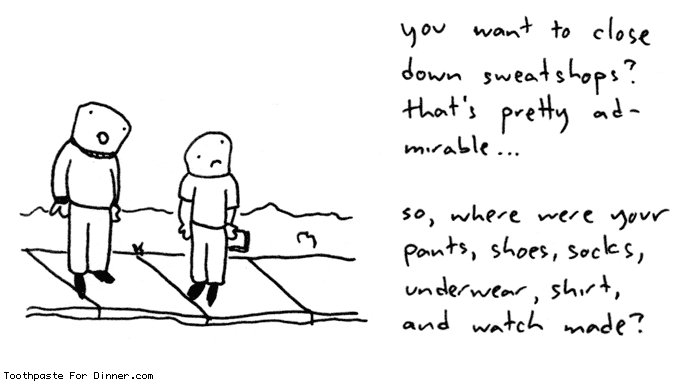
I am simply stating that sweatshops are good, and that the only problem is there are not enough of them. I know no member within the SDS would agree me (heck, if they did then why are they supporting a group hosting an event?), but give me a chance to let you know why they are good by linking you to this site. He does an excellent job of discussing why sweatshops are good.

Remember as a member of a society we want others to have the ability to find work. The discussion of wage is a discussion between the employer and the employee as it is an individual choice. As the Spanish Scholastics had pointed out
On the issue of the “just wage,” which has been the source of so much contention in Catholic circles over the past century, the Late Scholastics contended that a wage rate mutually agreed upon had to be just. According to Luis de Molina (1535–1600), an employer was “only obliged to pay [the laborer] the just wage for his services considering all the attendant circumstances, not what is sufficient for his sustenance and much less for the maintenance of his children and family.” Domingo de Soto (1494–1570) argued that “if they freely accepted this salary for their job, it must be just,” and held that “no injury is done to those who gave their consent.” His advice to unhappy employees was simple: “[I]f you do not want to serve for that salary, leave!”

Gratitude for the Mises Institute for the Review of the Chafuen's work on the Spanish Scholastics.

Sunday, February 03, 2008

Rambo: A searching for faith in a hostile envorinment

Many know that I am a pretty large fan of many of Sylvester Stallone movies. The Rocky Balboa series, the Rambo series, heck, I even enjoyed Cliffhanger. There is no doubt in mind to how good his two large series that took place mostly through the 70's and 80's are. Rocky Balboa came out a year ago and proved to be a success even with all the criticisms brought up by Stallone's age.

That same criticism arose with Rambo this year, yet that is not the only thing that helped deteriorate the amount of people who wished to see the film. The trailer for Rambo is poorly done. In view of the trailer alone, one would expect to see only meaningless action scenes with a loose cannon of an individual who had the highest training in the art of war. Truth is far from the fact, Rambo lacks anything except 80 montages.

This movie is not for the light of heart. Rambo is bloody. Limbs fly, women are raped, and children are beaten. This is the world of Burma to which the movie introduces us to in a news commentary in the beginning with a remembrance of a cold feeling from fall 2007, the death of a Buddhist priest who was taking part of a peaceful protest.

Watch it, understand that government's are corruptible and that at times you will find yourself not wishing to get involved only to find there is no choice, something must be done. You have to find the faith within yourself to believe that nothing is impossible.
So the world doesn't have a Rambo, we have other heroes. We have seen Gandhi, Washington, Bolivar, to even Dr. King.

Rambo is a film about believing in something, having a reason to live, and having the faith that even if it is only you, you can make that stand to help make the world a better place. Let it be intellectually, spiritually, or physically but make sure you know how to stand for liberty by knowing what it is, why you want it, and what rights grant us such a grand gift to live.

Oh yes, click the title for a link to their interactive menu with information about the movie, the situation in Burma, and Rambo icon/wallpapers.

Sunday, January 27, 2008

Why I became a Catholic: The Economic Principles That Led Me to Religion Part 1

Through my studies in economics, I have met many individuals who hold no faith towards religion. Some claim to be atheists while others agnostic, and yet I appear to be one of the limited few who turned to religion as my understanding of the science grew. The questions perhaps should be addressed why is it that I have turned to faith while others who study economics do not?

The Catholic faith believes that all of the citizens of the world are Catholics. (What religion would not see the world as its children?) Catholic, in fact, means universal therefore all men are called to go to Heaven by imitating Jesus, but this is only the tip of the faith which means I could not discuss all of it in one blog.
Economics is the study of individual's choices among a world of scarcity and the affects of their choices both intended and unintended. Think of a decision you made this morning of getting out of bed rather than staying in it. That is one extra person awake, breathing, eating, whatever other acts you may want to consider. That one extra person is breathing in that air that could have been for another, ate the food that could have gone for another, and even taking up an amount of space that could have been for another. Just one choice of getting out of bed has many side effects which would cause others to make decision likewise. If someone is in a spot you want to be in, you have a choice to make from asking them to move, paying them to move, or even moving to another spot themselves. Through actions individuals interact, and by cooperating with one another we reach our desired ends. Thus everyone in the world is tied to one another by the choices they make which affect the choices that others make.

The Catholic faith as it is universal sees the people within the Church to be the body of Christ and Jesus as the head. As the body, the people interact with one another each trying to imitate Christ and reach Heaven. Each making their own choices to reach heaven which affect others abilities to make choices and the Church tells Catholics to always look out for one another.
How fascinating that the world filled with individuals with different goals work together in such a constructive way for most individuals to actually achieve this goal. The world socially cooperates without any control mandating each individual how to do it. This symbolized to me the citizens of the world to be acting as a body, The Body of Christ.

Friday, December 28, 2007

Always begins with One; Is he the one?

I won't say much here. Former government employee wants to own a large dog. In fact, he owns two which are considered by the government of China to be owned illegally. Illegal because of their size. The court system has stopped his crusade this far, but as he tells it, he will continue according to the laws of China and take it to the Supreme Court.
This is a man determined to own his large dogs against a government who rules against ownership of not only large dogs but also more than one. This is not even going into the topic of internet censorship.
Good article. Good man.

Wednesday, December 26, 2007

For those who fought with the war cry "Freedom" President Lincoln was not one.

ORIGINALLY POSTED ON GMUECONSOCIETY.BLOGSPOT.COM
I am sure everyone has heard it by now since the outcry of
most Americans was an uproar at a statement by Ron Paul on President Lincoln.
Last year, the GMU Economics Society was fortunate to have a lecturer, Thomas DiLorenzo on this issue. Unfortunately we do not have any audio or video of the lecture, but I will link to support the argument as best as I can. I wish only to place some evidence to those looking to comprehend Ron Paul's statement. Not endorsing any politicians as the Econ Society, although the members may have full support for whomever they wish, but do wish to clarify a statement in which many Americans seem to be growing upset towards.

What is taught to children?
I leave it to you to decide if Lincoln was as good as we were taught he was, or if he is just another politician that lies, cheats, and steals.
I end with a link to a blog by Mister Snitch! Who does a great job of linking to valid sources to go with his argument on the bad press for Lincoln.

Wednesday, December 19, 2007

Saving the Environment: No need for government

If you did not know, today the U.S. government had passed their energy bill. This is supposed to jumpstart the use from petroleum fuel to bio-friendly fuels. Thank you government for all your hard work in passing a bill that is useless except to halt the choices of your own citizens.

PETA's efforts have failed in halting the amount of middle class citizens from buying chicken from KFC; should the U.S. government get involved in order to promote the practice of fast food chicken services? If your answer is no, then what is the difference between the government passing a law with chickens to passing a law with fuels.

There have always been alternatives to oil. We may not use these alternatives, but the reason is that it is too costly. The same reason why PETA's effort fail with KFC. Their chicken is cheap and to go to PETA friendly substitute is more costly. If their celebrity friends such as Paul McCartney and Pamela Anderson would pay me the difference I would happily stop eating at KFC; THIS IS NOT A CALL FOR GOVERNMENT SUBSIDIES IN ANY MANNER. Notice that Pam nor Paul HAVE NOT given money to me or anyone else to stop eating only raised their voice in a cheap protest that hardly costs them.

The new law makes it costlier to maintain of life that we have; the cheaper one and replaces it with the more costly. Is this the work of business lobbying allowing for government rules to go in favor? It appears so since we know through Ludwig von Mises that
[r]estrictive action on the other hand is always advantageous for the privileged group and disadvantageous for those whom it excludes from the market. It always raises the price per unit and therefore the total net proceeds of the privileged group. The losses of the excluded group are not taken into account by the privileged group.

From this we can judge that the government must be giving the blessing to one at the cost of the others. Thank you government.

Why do we have alternatives? Naturally, businesses want to make money and are always searching for the best method; at least, this is the popular stereotype. Thus there must have been alternatives although not cheap alternatives since no one was using them. This law allows for the more expensive alternatives to be cheaper only because their is a law made up by certain individuals to solve a problem that they define.
No, there is no need for such laws. This is just a disgrace and an abuse of power.

Note: this does not necessarily mean that the government is hurting one business at the cost of the others such as in oil giants. Rather, it may be the case that they all agreed to this law as it keeps each in line to searching for alternatives away from foreign oils. This would mean that the cost was transferred to the average citizen who must now PAY more for his fuel. Bio-friendly fuels were coming. It was inevitable, but the law is a disgrace. Atlas Shrugged could be rewritten with Hank Rearden as the bad guy, with his Rearden Steel benefiting from the government law that benefit the few at the cost of the Many.

Shame, Shame on you U.S. Government for increasing the costs to the many rather than having the product improved to be better suited for us all. Shame.

I did not discuss the issues with lightbulbs or most of the energy, but I think the broad case here makes its case in each argument.

Thursday, December 06, 2007

Tyranny of the Majority in the New Testament

We saw it best on The Passion of the Christ. The masses cried out for crucifixion. "Crucify him" the answer shouted in unison when asked by Pilate on what they wanted him to do. It is the same words recited every Easter at a Roman Catholic mass and yet many Christians still believe in majority rule, at least it appears so through what I have seen.

The tyranny of the majority is not a new concept. John Stuart Mill and Alexis de Tocqueville were only two of many who had spoken on the topic. Christians had read of this tyranny since the Church began. There it was written, spoken, even viewed (as in the Passion) for us to see, the Crucifixion of Christ. The masses had called for it. They threatened and Pilate to complete his duty as governor completed what the masses demanded in order to keep his own position. What else do we expect of a politician? To do the right thing and not kill an innocent man? It was either crucify an innocent man or have a mob on his hands which would cause him to lose face in Rome. Naturally, we would expect the politician to choose his own selfish needs and condemn an innocent man to his death.
Is the innocent's death the fault of the politician or the fault of the tyranny of the masses? Perhaps it is both, but the event has passed and the innocent man had died only to be born again. Thanks to the murderous mob that persuaded a Roman governor to crucify an innocent man. A man heralded by many today as the savior. Even through evil, Good arises.

Monday, November 26, 2007

Weakness of Enlisted Leadership (USMC) [long post]

It is the Non-Commissioned Officers(NCO) which are the backbone of the military.
When Marine officers and Staff Non-Commissioned Officers (SNCO) were all killed during the Battle of Chapultepec, it was the NCOs who led the charge getting the Marines to the Halls of Montezuma. It is the NCO who carries out the orders and makes sure that the Marines are capable of completing their mission. Yet how are these NCO's chosen; how are they promoted through the enlisted to move up in rank?

The U.S. Marines pride themselves in their physical attributions that stand out above the other branches of the United States military, but a major flaw within the Marines is their promotion system to become a NCO.

I will save you the trouble of reading the whole thing. I conclude that the promotion system promotes people who do not have leadership skills which does not ready the Marines for battle, but in fact depreciates the Marines ability to do their best.

The Marines are promoted through a point system. This is the Marine way of knowing when a Lance Corporal (LCPL) is ready to be promoted to Corporal. This is the method of creating a leader for the troops who is able to make a decision through tough times.
Naturally, we must assume that the points must be given by certain accomplishments which are:
  • Physical Fitness Test
  • Proficiency and Conduct Marks
  • Self Educated Bonus [Marine Corp Insititute (MCI's), College Classes, Etc]
  • Time in Grade as a LCPL, Time in Service
  • Rifle Marksman Score
  • Recruitment Bonuses
  • Drill Instructor, Recruiter, Marine Security Guard

The Command then has the duty of assigning a score to be met for different jobs or Military Occupational Specialty (MOS) due to the amount of enlisted in each rank.
The point system does not promote due to a Marine's leadership skills or for a Marine's productivity.

Throughout the private sector, individuals receive in an increase in their wage according to their productivity. Yet in the military, marines only receive a wage increase according to their grade, and wage level determined by time in service. At times, the government may increase the Marine's wages.

In the Marines, there is no incentive for a Marine to be a leader. To be promoted they want an individual who is fit. Physical Fitness does not dictate strong leadership otherwise why not have the Strongest Man as our President. Even in sports, the coaches lead while the individuals who are stronger physically are the players following the coaches instruction.
Rifle Marksmanship has a strong attachment to the Marines as Marines are first Riflemen, yet if a Marine has the best shot, wouldn't we wish to have him to where he is most useful; firing his weapon? A great shot does not dictate strong leadership skills.
Proficiency and Conduct marks are the closest that the military constructed to annotate a Marines productivity yet these Pros and Con marks are dictated by the NCO's above the Marines. Therefore the Marine's productivity is accountable to the perception of the NCO's above him, there is no system provided to show the impact of the Marine. This an important problem since it allows the NCO's to promote friends or Marines they like more than others easier without any penalty of not promoting the Marine who deserves it.
Recruitment points, well, this speaks for itself. Does an individual who can bring more individuals into the service prove he has the leadership skills needed to make decisions during a period of high stress?

What does this tell us? That the backbone of the Marine Corp is filled with many individuals who do not have the capability to lead the junior Marines through tough times. This is not to say that there are not great NCOs serving now in the Marine Corp, but rather the amount of poor NCO's is vastly greater than great NCOs.

A quick look for proof, while serving in Iraq I was a Corporal under a Sergeant. The desert allows one to see the weather coming from miles away. The Sergeant who was promoted meritoriously, meaning given rank for certain accomplishments (in this case, driving a Colonel and barracks manager), wanted to keep the sides of a tent rolled up rather than down during a sandstorm allowing for the Marines living in the tent to have their positions (weapons included) filled with sand. The Sergeant gives a great demonstration of the poor leadership skills of a Non Commissioned Officer who does not have the leadership capabilities to accomplish the mission under stress. Get back to driving Miss Daisy, Sergeant.

Tuesday, November 06, 2007

Control: Is it ever achieved?

Recently, I have entered into a debate with many individuals over the topic of control.

Control defined in Dictionary.com as "to exercise restraint or direction over; dominate; command."

I do not believe we can ever achieve control. To me this is proven by action. If we were ever in control why would we act? By acting we would be changing the situation causing us to lose control. In acting, we are trying to get closer to being in control.

What do we want control in? Control of a situation, of our actions, of nature.
We can never have control of a situation since there are outside factors that influence our actions. Those outside factors cause us to act but do not allow us to have control on the outcomes of our actions. We can act causing an effect that was not perceived before the action was taken place therefore taking any control away from our actions as we caused an unwanted outcome.

There is no system in the world that can ever let us be in control. Socialism fails as it never obtains control, but socialism is not alone; No One can ever obtain control; except the Lord.

For this do we have religion, control is only obtained through our faith in God. Socialism was man's attempt at achieving Heaven on Earth. The attempt of a world full of control with no fears upon need, yet as control can never be obtained thanks to socialism's failure to many economic problems such as imitating the price and money system, we find that there is only one way to achieve control which is through faith.
To overcome sin we must pray for strength, for courage, for self control. It is through God's will that we are able to drive without an accident interfering in our desired end. Control can be achieved, but to achieve it you must have faith otherwise we are just blind with hands outstretched in hopes that we do not walk off a ledge. To say you have control is to believe that you are in control; belief is a matter of faith which is a gift from the Holy Spirit.
In the end, Man can not have control except through the Lord, our God

Monday, October 22, 2007

The Trinity of the Market Price

Have to love the end of a Sunday in the middle of football season.
Yes, Football, great weather, and papers to write for so many classes evolve into late nights... ok only until two because I my cost - benefit analysis tells me that sleep is greater than staying up to finish editing a paper.

The point, the Trinity of the Market found in Mises' Human Action.
Check it out page 338.
The pricing process is a social process. It is consummated by an interaction of all members of the society. All collaborate and cooperate, each in the particular role he has chosen for himself in the framework of the division of labor. Competing in cooperation and cooperating in competition all people are instrumental in bringing about the result, viz., the price structure of the market, the allocation of the factors of production to the various lines of want-satisfaction, and the determination of the share of each individual. These three events are not three different matters. They are only different aspects of one indivisible phenomenon which our analytical scrutiny separates into three parts. In the market process they are accomplished uno actu. Only people prepossessed by socialist leanings who cannot free themselves from longing glances at socialist methods speak of three different processes in dealing with the market phenomena: the determination of prices, the direction of productive efforts, and distribution.


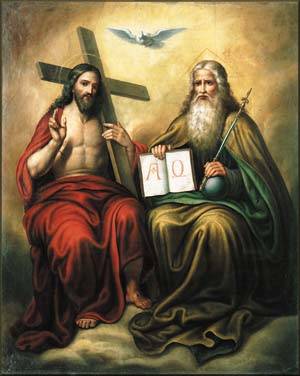
Just as the Holy Trinity in the Father, Son, and the Holy Spirit. The pricing process is broken down only to allow our feeble minds to better understand it.